
Who Actually Issues a Burn Ban? What 642 Counties Told Us
On Nov. 1, 2026, 642 U.S. counties in 26 states were under burning restrictions. I traced who issued them, from county judges to state foresters and land managers, and what each kind of ban actually means.
On November 1, 2026, the BurnAtlas burn ban map showed 642 counties under some kind of burning restriction across 26 states. That number sounds tidy. It isn't. When I went through the source behind each state, I found that "burn ban" means at least four different things depending on where you live, and that the office that issues it can be a county judge, a state forester, a natural resources department or a federal land manager. If you've ever been confused about who to call, the confusion is built into the system. Here's what the data actually shows.
The snapshot
These were the ten states with the most counties under a restriction that day, along with the agency each state's data comes from:
State | Counties | Status label | Source we read from |
|---|---|---|---|
Texas | 149 of 254 | Burn ban | Texas A&M Forest Service |
Minnesota | 87 of 87 | Restricted | Minnesota DNR |
Mississippi | 57 | Burn ban | Mississippi Forestry Commission |
Arkansas | 56 | Burn ban | Arkansas Dept. of Agriculture, Forestry Division |
Louisiana | 45 | Burn ban | Louisiana Dept. of Agriculture & Forestry |
North Dakota | 43 | Burn ban | North Dakota Dept. of Emergency Services |
Wisconsin | 30 | Burn ban | Wisconsin DNR |
California | 30 | Restricted | CAL FIRE |
Colorado | 27 | Restricted | Colorado Division of Fire Prevention & Control |
Michigan | 17 | Restricted | Michigan DNR |
Texas alone was 149 of the 642, about 23%. The top five states together accounted for 394, or about 61%. Restrictions cluster heavily, and they cluster in places where counties have their own ban power.
One caution about the right-hand column: it's the agency whose list we read, which isn't always the agency that issued the ban. In several states, counties issue the bans and a state agency just collects them in one place. That distinction turns out to be the whole story.
Four different things called a "burn ban"
Sorting the 26 states by what their restriction actually is, I ended up with four rough groups:
County orders. A county judge, commissioners court or county board passes a ban for its unincorporated area. Texas and Oklahoma work this way, and the notes in our data show the same pattern in Arkansas and Kentucky, where the state forestry agency lists county bans, and in Illinois, Kansas and Missouri, where there's no single state list at all.
State permit restrictions. A state natural resources or forestry agency stops issuing burning permits, or limits them. Minnesota, Michigan, Wisconsin, Maine and California's CAL FIRE permit suspensions fall here.
Stage 1 and Stage 2 fire restrictions. The western system, usually set by land managers for the lands they manage. Arizona, Utah, Nevada, Colorado and the Black Hills National Forest in South Dakota were in this group.
Emergency declarations. North Dakota's data comes from its Department of Emergency Services, and its counties were flagged as "Emergency."
This is my grouping from the labels in our data, not an official classification, and some states mix several systems. But it explains why "is there a burn ban?" can have a different answer depending on who you ask.
Texas: the county signs it
Texas is the clearest example of a county-run system. County burn bans are adopted under Local Government Code §352.081. I read two real orders to see how they work in practice.
Tom Green County's order, titled "Order Prohibiting Outdoor Burning," was signed by the county judge. It rests on a finding that "the Texas Forest Service has determined that drought conditions exist" in the county, and it runs "for 90 days from the date of adoption... unless the restrictions are terminated earlier" (Tom Green County order). A violation is "a Class C misdemeanor, punishable by a fine not to exceed $500.00."
Comal County's order was adopted by the commissioners court instead, and it names the Keetch-Byram Drought Index as part of how the fire marshal and Texas A&M Forest Service determined that drought conditions exist (Comal County Order 534). Same 90 days, same Class C misdemeanor.
Both orders carve out exemptions, including agricultural planting and harvesting operations and burns by certified prescribed burn managers who meet state requirements. If you're a landowner planning a prescribed burn in Texas, those exemptions matter a lot, and they're worth reading in your own county's order rather than assuming.
So in Texas, the drought finding comes from the state forest service, but the ban itself is a county decision. That's why some counties go under a ban and their neighbors don't, even in the same drought.
Oklahoma: two layers, and the state one wins
Oklahoma has both county and governor-issued bans, and the state's Department of Agriculture, Food and Forestry explains the rules clearly (ODAFF Burn Ban FAQ):
County bans are passed by a vote of the county commissioners, "with the advice of the county's fire chiefs," and last no more than 14 days unless renewed.
Before passing one, commissioners must find extreme fire danger. That means severe, extreme or exceptional drought in the county (the categories you see on the U.S. Drought Monitor, which we explain in how drought levels affect your burn window), no more than half an inch of rain forecast for the next three days, and either unusually high fire occurrence or more than 20% of wildfires caused by escaped debris or controlled burns.
A governor's ban "supersedes county burn bans" and stays in place until state forestry determines conditions have improved.
Penalties: up to $500 for a county ban and up to $1,000 for a governor's ban, with up to a year in jail either way.
Local TV coverage of how this plays out is a good plain-language summary too (News 9, How burn bans work in Oklahoma). The 14-day county limit versus Texas's 90 days is a good example of why you can't carry one state's rules across a border.
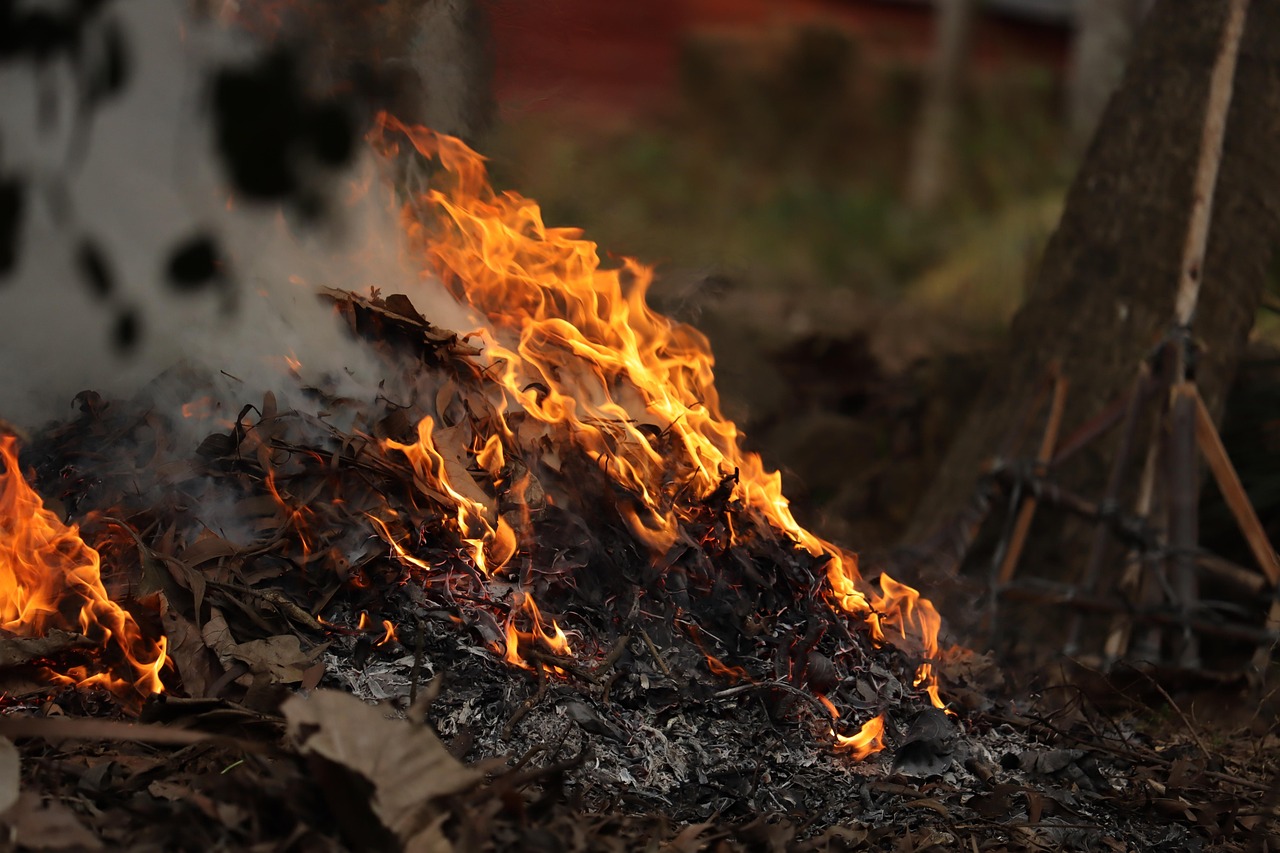
Burning brush and yard debris is the most common activity a county burn ban shuts down. Photo: Pixabay.
Minnesota: "restricted" is not a ban
Minnesota showed all 87 counties as "Restricted" on our snapshot, and the Minnesota DNR is careful about the wording. Its burning permit FAQ says that "restricting the issuing of burning permits is a not a 'burning ban'" (Minnesota DNR). During spring restrictions, the DNR stops issuing permits in fire-prone areas, and only DNR Forestry can grant variances for prescribed fire projects.
A true burning ban in Minnesota goes further: existing permits are cancelled, and even recreational fires and outdoor smoking can be prohibited. The DNR also notes that cities can be stricter than the state. That's three tiers of rules for one backyard fire.
The West: Stage 1, Stage 2 and closures
Much of the West uses staged fire restrictions instead of a simple on/off ban. Arizona's Department of Forestry and Fire Management describes three stages on state lands (Arizona DFFM):
Stage 1: no fires outside developed campgrounds and picnic areas, no fireworks, no open-flame welding, and restricted smoking.
Stage 2: no campfires at all, even in campgrounds, plus limits on smoking, engines, chainsaws during the day, and firearm use outside lawful hunting.
Closure: no public access to the land.
The catch is that these apply to specific lands. State trust land, national forests and BLM land can each be under different stages at the same time, which is why our data for some western counties says "Stage 1 in part of the county." Private land rules can be different again.
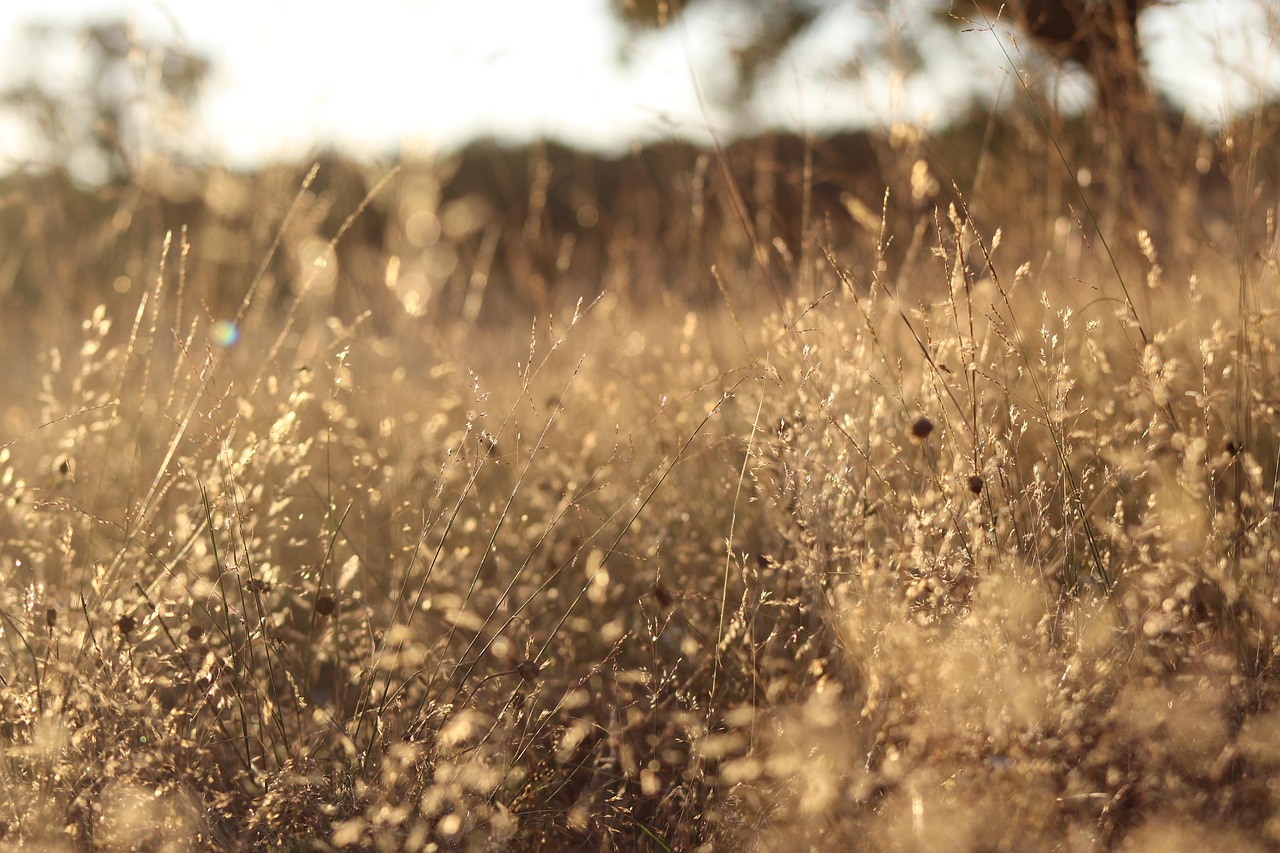
Cured grass during a drought. Drought findings drive many county bans, but who acts on them varies by state. Photo: Pixabay.
Fire districts, cities and the hardest part of tracking bans
Every page on our map carries the same warning: "cities, fire districts and air quality authorities often set stricter rules than the county." I'd underline that. Even when a county has no ban, a city ordinance, a fire district rule or an air quality burn-day call can still say no. That applies to fire pits, bonfires and storm debris as much as to big burns.
It's also where tracking gets hard. In Kansas and Missouri, there's no single state list of county bans, so on November 1 our data came from local news reports of county announcements. One Kansas note read: "County burn ban until fire chief lifts it." That's a perfectly good rule locally, but it's a rule that only exists in a press release. Illinois was similar, with bans issued county by county through emergency management agencies.
My read of all this: the system isn't broken, it's local by design. Fire danger is local, so the authority is local. But it means the burden is on you to find the right office.
How to find out who's in charge where you are
Start with your county. Look up your county on the burn ban map. Each county page shows the status, the date it was last checked and the official source.
Check the state layer. In states like Oklahoma, a governor's ban can override the county. In states like Minnesota or Wisconsin, the DNR permit system matters more than the county. Our burn permits by state guide covers who issues permits where.
Check the land. If you're near federal or state land in the West, check that land manager's fire restriction stage too.
Call your fire department. They'll know about city ordinances and fire district rules that never make it onto a state list. Many places also require you to notify them before an agricultural burn.
Read the exemptions. Ban orders often exempt certain agricultural and prescribed burns, but on specific conditions. Don't assume you're exempt.
Check again on burn day. Bans can start or end within a day, and a Red Flag Warning is a strong hint that one is coming.
And remember that "no ban" doesn't mean "no rules." A permit can still be required, and a permit doesn't cover everything either. If you want the difference between the two spelled out, see burn ban vs. burn permit.
I'd like to repeat this snapshot every month and see how the mix changes through a full year. My guess is that the western stage systems and the county systems will peak in completely different seasons, and it'd be good to see that in the numbers rather than just guess at it.
Frequently asked questions
Who issues burn bans?
It depends on the state. In Texas and Oklahoma, county officials issue county bans, and Oklahoma's governor can issue a statewide ban that overrides them. In states like Minnesota, the state DNR restricts burning permits. In much of the West, land managers set Stage 1 and Stage 2 fire restrictions. Cities and fire districts can add stricter rules.
How long does a county burn ban last?
It varies. Texas county orders we read ran for 90 days unless lifted earlier. Oklahoma county bans last no more than 14 days unless renewed.
What's the penalty for burning during a ban?
In Texas, the county orders we read make it a Class C misdemeanor with a fine up to $500. In Oklahoma, it's up to $500 for a county ban or $1,000 for a governor's ban, with up to a year in jail.
Are prescribed burns exempt from burn bans?
Sometimes. The Texas orders we read exempt certified prescribed burn managers who meet state requirements, and some agricultural operations. Exemptions vary by county and state, so read your local order.