
Backing, Flanking and Head Fires: How Much Faster Is a Head Fire, Really?
Every guide says head fires are faster than backing fires. I ran the fire-shape model used in fire spread software to see by how much. At 3 mph midflame wind, the answer is about 12 times.
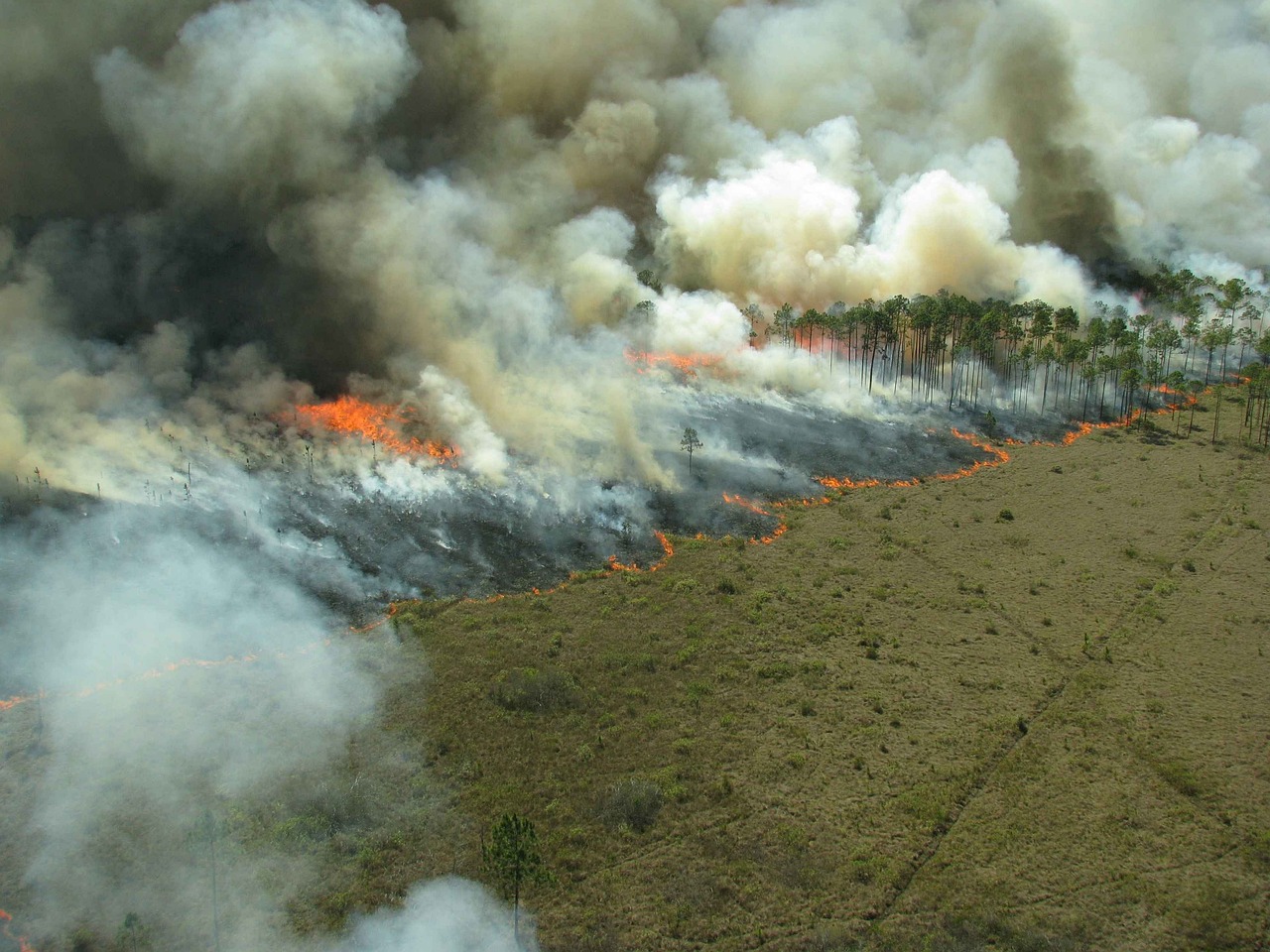
Every prescribed fire guide tells you the same three things: a backing fire is slow and gentle, a head fire is fast and hot, and a flanking fire is somewhere in between. That's correct, but it left me wanting a number. How much faster is a head fire? Twice as fast? Ten times? So I took the fire-shape model that fire spread programs actually use, ran it across a range of winds, and checked the results against the field numbers in the burning guides. The answer was bigger than I expected, and it changes how I think about lighting a unit.
Three fires from one line of flame
Light a single spot of grass on a breezy day and you actually get all three fire types at once, just on different sides of the same fire. Oregon State University Extension's ignition guide defines them by direction (OSU Extension EM 9387):
Backing fire "moves against the wind or downslope in the absence of wind. Backing fires have the least intense fire behavior."
Flanking fire "moves at right angles to the wind or dominant slope and has intermediate fire intensity."
Heading fire "moves with the wind or upslope in the absence of wind. A heading fire has the most intense fire behavior."
The prescribed-fire network at extension.org puts it in flame terms: backfires "burn slowly and typically have short flame lengths," flank fires burn "more quickly than backfires," and head fires "move quickly and typically have longer flame lengths than the other types" (Prescribed Fire, Types of Fire).
Notice the slope part. Uphill acts like wind. A fire running up a hill is a head fire even on a calm day.
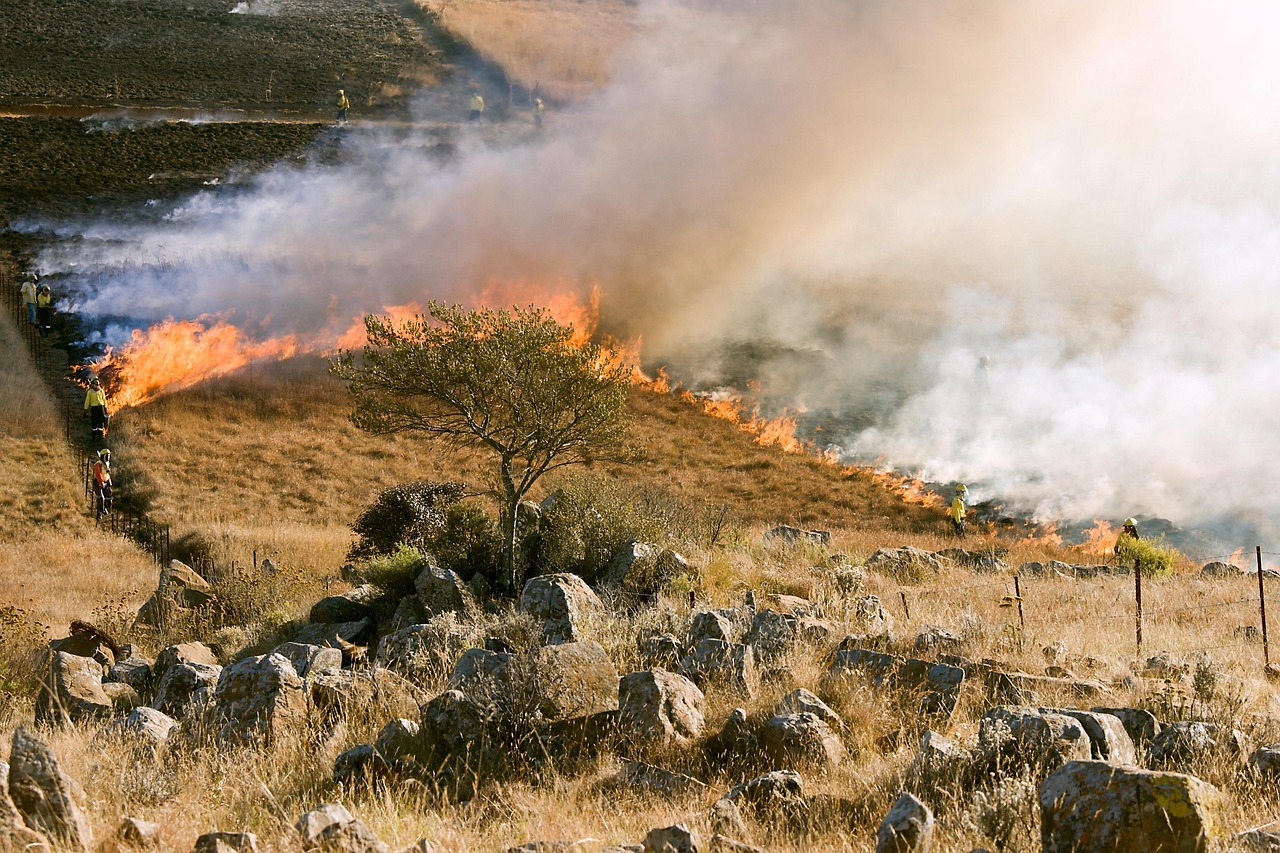
Fire running upslope behaves like a head fire, even without wind, because the flames lean into the fuel above them. Photo: Pixabay.
The fire ellipse
Fire models treat a wind-driven fire as an ellipse that grows outward from where it was lit. Picture a raindrop on a car windshield at highway speed: it stretches into a long teardrop in the direction the air is pushing it. The stronger the wind, the longer and skinnier the shape.
FlamMap and FARSITE, two of the standard U.S. fire spread programs, use Anderson's (1983) equation for how stretched the ellipse gets, based on midflame wind (the wind at flame height, not the forecast wind). They also assume the fire starts at the rear focus of the ellipse, which gives you the backing spread rate automatically (FlamMap technical documentation). Here it is in Python:
import math

def fire_shape(midflame_mph):
    # Anderson (1983) length-to-breadth ratio, minus 0.397 as in FlamMap/FARSITE
    lb = 0.936 * math.exp(0.2566 * midflame_mph) \
       + 0.461 * math.exp(-0.1548 * midflame_mph) - 0.397
    lb = max(lb, 1.0)
    e = math.sqrt(1 - 1 / lb**2)          # how stretched the ellipse is
    back_vs_head = (1 - e) / (1 + e)      # backing speed as a share of head speed
    flank_vs_head = (1 / lb) / (1 + e)    # flanking speed as a share of head speed
    return lb, back_vs_head, flank_vs_head
What came out
Midflame wind | Length ÷ width | Head fire is this many times faster than backing | Flanking speed vs. head |
|---|---|---|---|
0 mph | 1.0 | 1X (a circle) | 100% |
1 mph | 1.2 | 3.6X | 53% |
2 mph | 1.5 | 6.9X | 38% |
3 mph | 1.9 | 12.6X | 28% |
4 mph | 2.5 | 22X | 21% |
5 mph | 3.2 | 39X | 16% |
6 mph | 4.2 | 67X | 12% |
At zero wind, all three fires are the same fire: a circle. But the gap opens up fast. At just 3 mph at the flames, which is roughly a 7–8 mph 20-foot wind in open grass, the model says the head fire runs about 12 times faster than the backing fire. At 5 mph midflame it's nearly 40X.
The flanking column is the one I didn't expect. At 3 mph, a flank fire moves at less than a third of head fire speed. It's much closer to a backing fire than to a head fire, which is why flanking is such a useful middle option.
Checking the model against the field
I don't fully trust the big numbers at the bottom of that table, and neither do the people who wrote the model. FlamMap's own documentation says the rear-focus assumption "has not been adequately examined" and that it "may under predict backing fire spread." In plain terms, real backing fires probably creep a bit faster than the model says, so the true head-to-backing ratio is probably smaller than my table, especially at higher winds. I'd treat these numbers as an upper bound.
The field guides give a concrete number for backing fires. The Forest Encyclopedia's southern prescribed burning guide says backing fires "proceed at a speed of 1 to 3 chains per hour" and that "variations in wind speed have little effect on the rate of spread of a fire burning into the wind" (Forest Encyclopedia, backing fires). A chain is 66 feet, so that's roughly 65 to 200 feet per hour. That's a slow walk spread across a whole hour.
Combining the two, a backing fire at 1–3 chains an hour and a 12X ratio at 3 mph midflame suggests a head fire on the same day in similar fuel could be running something like 12–36 chains an hour, or about 800 to 2,400 feet per hour. That's my rough back-of-envelope estimate, not a measured number. But it shows the scale of the difference. One side of your fire is creeping, and the other side can cover the length of a football field in well under ten minutes.
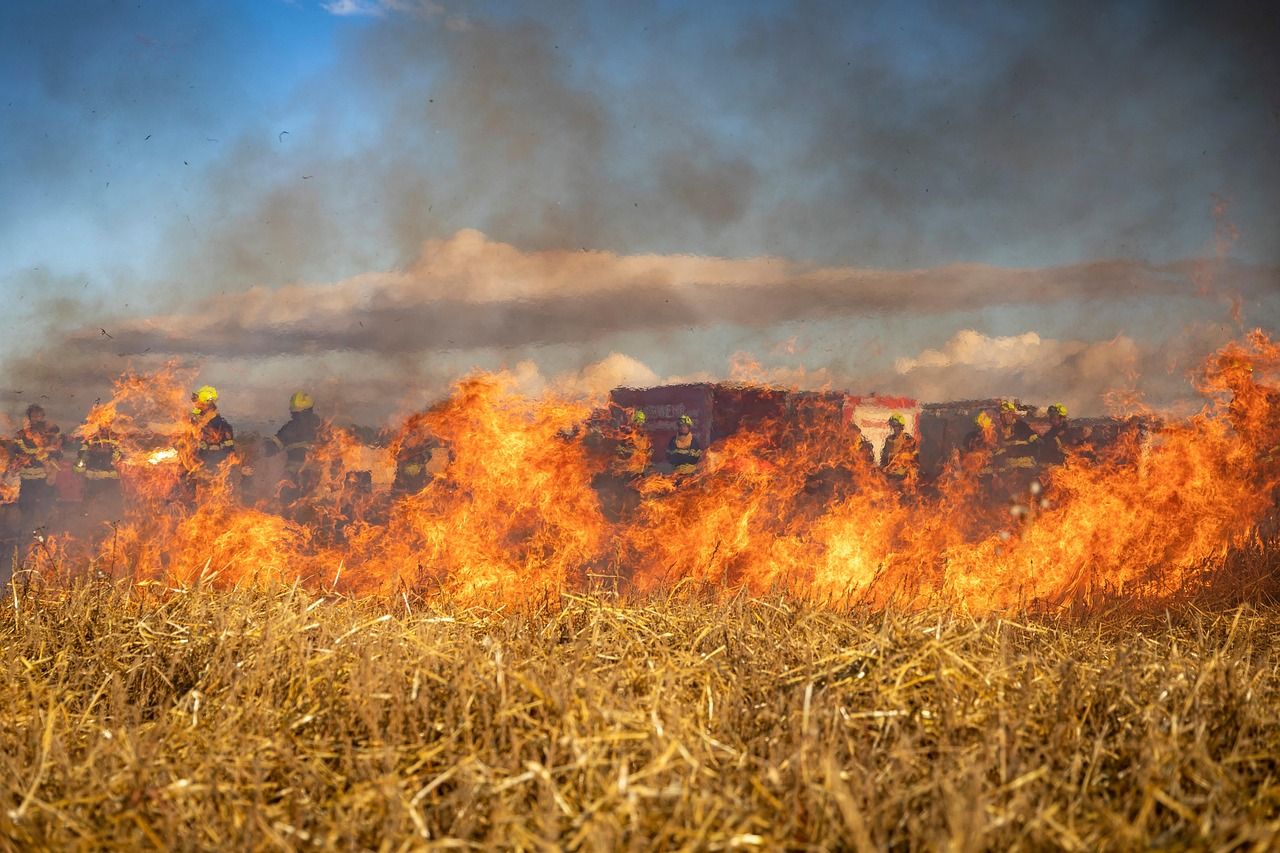
A head fire in dry field fuel: tall flames and a wide flaming zone. This is the side of the fire that sets the pace. Photo: Pixabay.
How burners use each one
Once you see the numbers, the standard lighting sequence makes a lot of sense. Extension.org describes the common pattern: backfire first, then flank fires, then the head fire. Each step uses the slower fire to build a safety margin for the faster one.
Backing fire first, along the downwind line. OSU: "Backing fires are ignited against a control line" and "the rate of spread is slow." Burning a wide black strip on the downwind side means the eventual head fire runs into fuel that's already gone. NC State's eFire guide calls backing fires "essential in creating safety zones" (NC State eFire). The tradeoff: slow, low fire sits in one place longer, and OSU warns it "can overheat the top layers of soil and damage sensitive feeder roots."
Flanking fire along the sides. Lines are lit directly into the wind, so the fire spreads sideways. OSU notes flanking "requires a high level of experience," because a wind shift can turn a flank into a head fire. Extension.org calls this a "running flank fire."
Head fire last, from the upwind side. OSU: it produces "high fire intensity, fast rates of spread and long flame lengths." That intensity is sometimes the point, for example when you need to top-kill brush, as in reclaiming pasture from cedar.
Strip-head fire as a middle path. Short head fires lit in strips, so each one only has a short run before it hits black. The Forest Encyclopedia says strips are often set "1 to 3 chains apart" and the technique "can accommodate wind shifts up to about 45 degrees" (Forest Encyclopedia, strip-heading fire).
Ring firing. Lighting the whole perimeter so the fire draws toward the center. NC State notes it's used "when smoke is needed to move upward more quickly," which ties into mixing height and smoke dispersal. OSU warns that "fire whirls and smoke whirls are possible," and extension.org says it "should only be done by very experienced burn bosses and crews."
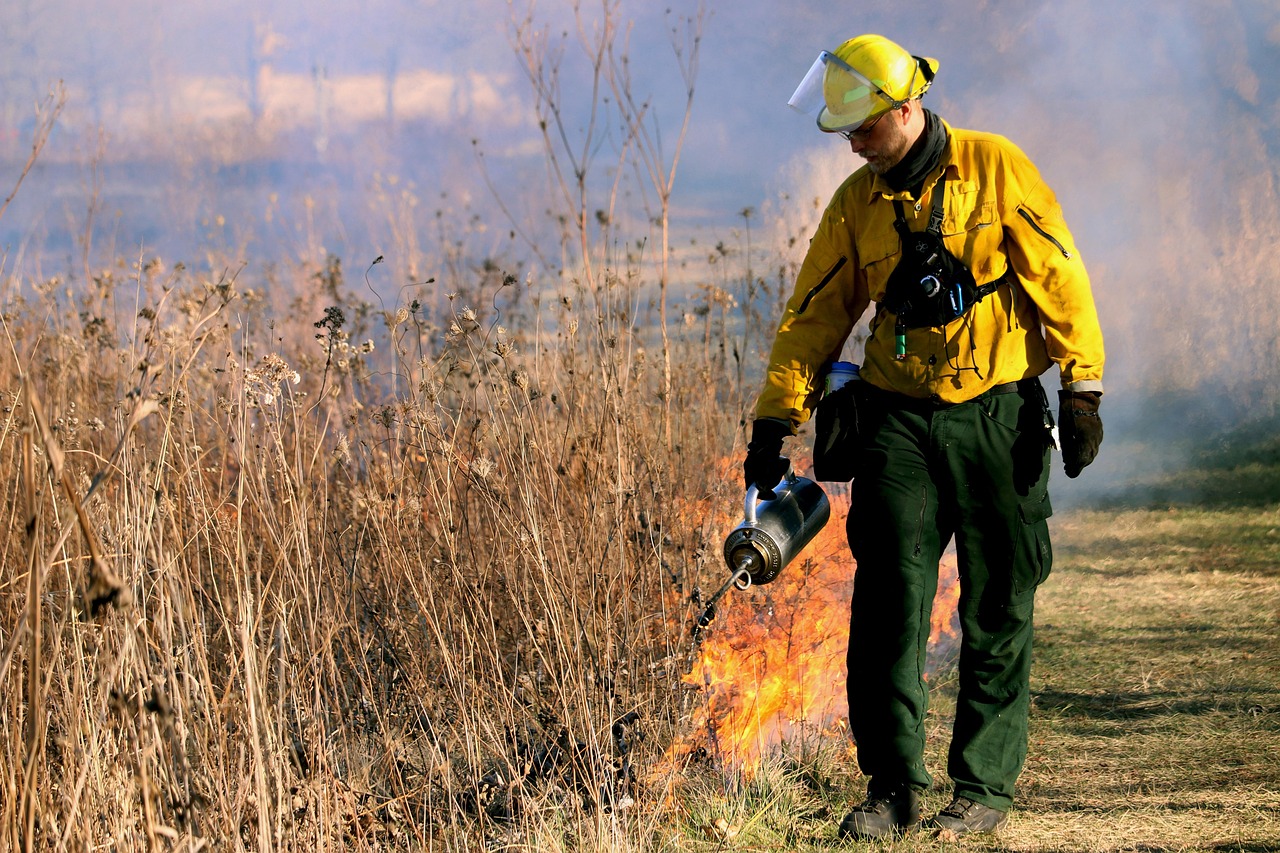
Where and in what order the drip torch goes is the main lever a burn boss has over which kind of fire spreads where. Photo: Pixabay.
What I take from this
Before running these numbers, I thought of the three fire types as three settings: low, medium, high. The model says it's more like three gears with huge gaps between them, and the gaps widen quickly with wind. A few practical points follow:
Convert your wind. The ratios above are based on midflame wind. A 15 mph forecast is roughly a 5 mph midflame wind in open grass, which is the 39X row. Read the fire weather forecast and convert before you decide on a lighting pattern.
Build black before you go fast. Your backing line is your margin. Size it, and your firebreaks, for the head fire's speed, not the backing fire's. Our free firebreak width calculator helps with that.
Treat a wind shift as a gear change. A shift can turn your gentle flank into a head fire in minutes. This is one of the weather mistakes that turn controlled burns into wildfires.
Watch the slope. Uphill runs are head fires whether the wind agrees or not.
Match the gear to the season. A head fire in cured fall grass and one in green-up spring grass are different animals. See spring vs. fall burning.
Don't run a head fire into a Red Flag day. If a Red Flag Warning is posted, the ratios in the table are the least of your worries.
Put the lighting plan on paper. Write the ignition sequence into your burn plan so everyone knows the order before the first torch is lit.
The next thing I'd love to test is the backing-fire question the model is unsure about. Timing a backing fire and a head fire over a measured distance on the same burn would show how far off the rear-focus assumption really is. If you burn and have ever timed your fires, I'd like to compare notes.
Frequently asked questions
What is the difference between a backing fire and a head fire?
A backing fire burns against the wind or downslope and is slow with short flames. A head fire burns with the wind or upslope and is fast, hot and has long flames. A flanking fire burns at right angles to the wind and is in between.
How much faster is a head fire than a backing fire?
It depends heavily on wind. Using the standard fire-shape model, a head fire is about 7 times faster than a backing fire at 2 mph midflame wind and about 12 times faster at 3 mph. The model may overstate the gap at higher winds.
How fast does a backing fire spread?
Southern prescribed fire guidance puts backing fires at about 1 to 3 chains per hour, or roughly 65 to 200 feet per hour, and notes that wind speed has little effect on it.
Why light a backing fire first?
A backing fire along the downwind control line creates a wide burned strip. When the faster flank and head fires are lit later, they run into fuel that's already gone.