
How Long After Rain Can You Burn? I Simulated It, Fuel Size by Fuel Size
I soaked a fuel moisture model with simulated rain and watched grass, twigs, limbs and logs dry out hour by hour. Here's how long each takes, the light-shower trap, and the best post-rain burn window.
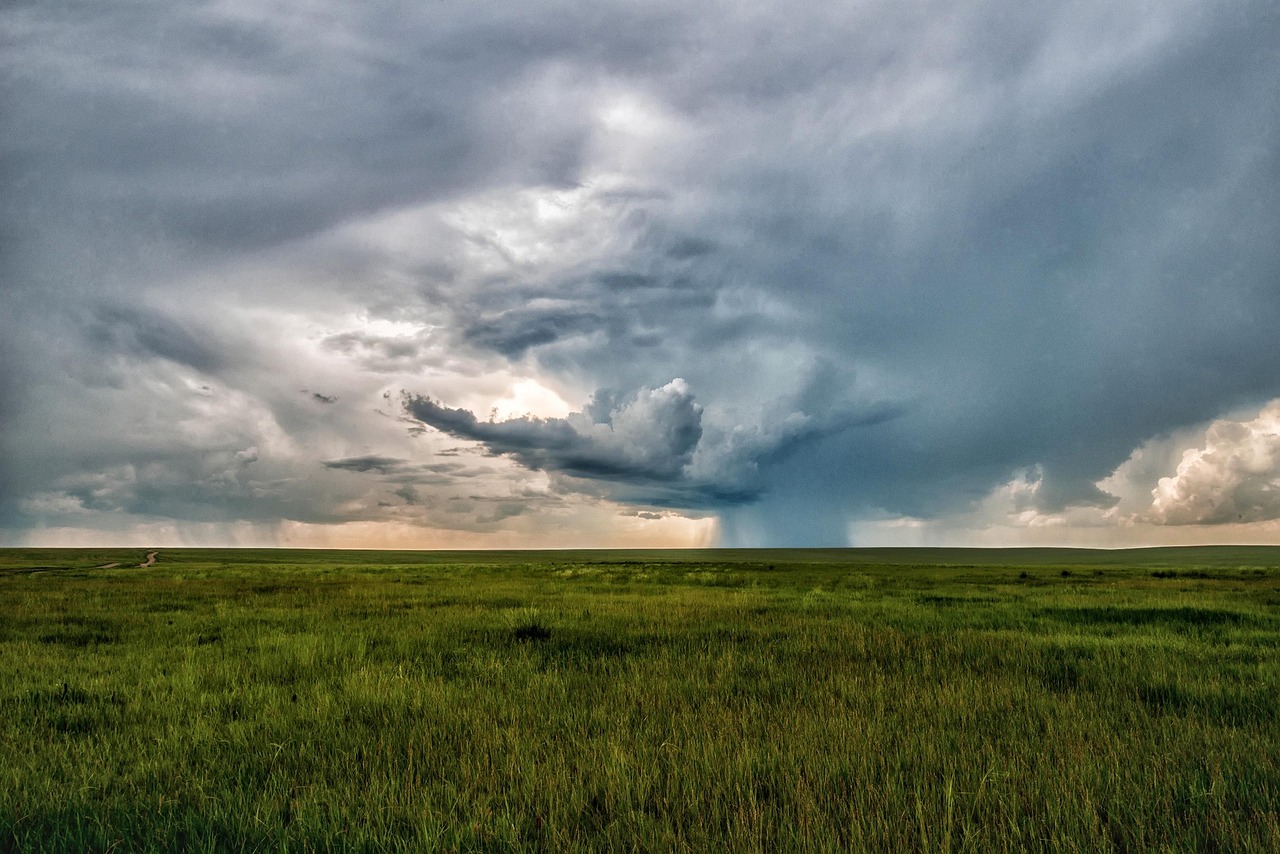
"How long after a rain can I burn?" is one of the most common questions landowners ask, and the usual answer from most guides is "it depends." That's true, but not very useful. So I took the same fuel moisture model that fire danger systems are built on, soaked it with a simulated rain, and then watched each size of fuel dry out hour by hour over the following days. The answer turns out to be less "it depends" and more "it depends on which fuel you're asking about," which is something you can actually plan around.
What counts as rain, to a fire
Not all rain is equal. The NWCG glossary defines a wetting rain as rain that "significantly reduces fire danger," and gives two rough thresholds: "One-tenth of an inch may be sufficient to reduce fire danger in grass fuel models. One half inch may be necessary for timber fuels under closed canopies" (NWCG Glossary of Wildland Fire).
That 5X difference between grass and timber is the first clue. Thin fuels in the open soak up a little water and get wet fast. Thick fuels under a canopy need a lot of water, delivered over a long time, before they notice. And as we'll see, the drying side works the same way in reverse.
The simulator
Dead fuels are sorted by how fast they gain and lose moisture: 1-hour fuels (grass, leaves, needles under ¼ inch), 10-hour (¼ to 1 inch), 100-hour (1 to 3 inches) and 1000-hour (logs over 3 inches). Each one drifts toward the moisture level the air is pushing it toward, closing about 63% of the gap in one "timelag." I used the Simard (1968) equation that U.S. fire danger work uses to turn humidity and temperature into that target moisture (reproduced in USDA Forest Service paper PNW-336).
Then I made some assumptions, and I want to be upfront that these are mine:
A soaking rain ends at 8 a.m. and leaves the fuels at about 35% (1-hour), 30% (10-hour), 28% (100-hour) and 25% (1000-hour).
The days after the rain are fairly normal late-winter days: humidity peaks at 85% before dawn and drops to 25% by 3 p.m., with temperatures between 45°F and 75°F.
Before the rain, everything had settled at about 11%.
The model doesn't know about puddles, mud, sun on a south slope or a thick mat of wet leaves. I'll come back to that. But it does capture the most important thing, which is that different fuel sizes run on completely different clocks.
What happened after a soaking rain
Time after rain | 1-hour | 10-hour | 100-hour | 1000-hour |
|---|---|---|---|---|
Same day, 10 a.m. | 12.1% | 25.3% | 27.5% | 25.0% |
Same day, 3 p.m. | 5.4% | 17.8% | 26.5% | 24.9% |
Day 1, 3 p.m. | 5.4% | 11.1% | 23.2% | 24.5% |
Day 2, 3 p.m. | 5.4% | 10.4% | 20.6% | 24.2% |
Day 3, 3 p.m. | 5.4% | 10.4% | 18.5% | 23.9% |
Day 5, 3 p.m. | 5.4% | 10.4% | 15.7% | 23.3% |
Day 9, 3 p.m. | 5.4% | 10.4% | 12.8% | 22.2% |
The fine fuels didn't care. Two hours after the rain stopped, the 1-hour fuels were already down to 12%, and by mid-afternoon they hit the same 5.4% they'd have reached on a dry day. In the model, a soaking rain buys the grass about one morning.
That sounds extreme, but the field guidance agrees surprisingly well. The Forest Encyclopedia's prescribed burning guide notes that "grassy openings containing cured material can be burned within hours of a drenching rain if good drying conditions exist" (Forest Encyclopedia, fine-fuel moisture). And after a Georgia drought, the Forest Service warned that "even after an inch of rain, leaves and other fine fuels will dry out within three days" (USDA Forest Service, Chattahoochee-Oconee). Leaf litter takes longer than the model's single blade of grass because it's a layered mat, not a single thin fuel, but it's still days, not weeks.
The twigs took about a day. 10-hour fuels were back into their normal daily cycle by the afternoon after the rain.
The limbs took more than a week. 100-hour fuels dropped from 28% to about 13% over nine days.
The logs barely noticed. After nine dry days, the 1000-hour fuels had only dropped from 25% to 22%. A single rain is a slow-moving event for a log, both getting wet and drying out.
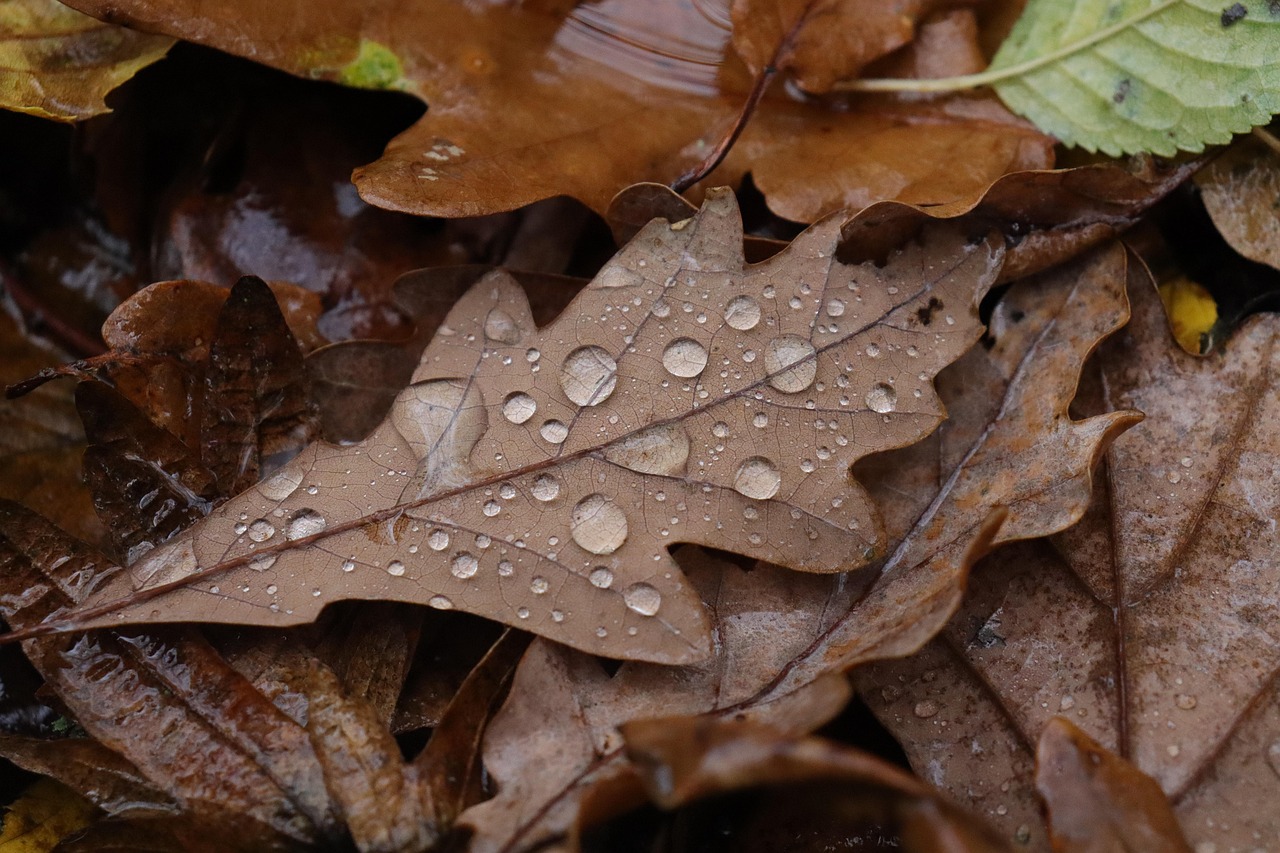
Raindrops sitting on top of dead leaves. The top of the litter dries in hours, but the bottom of a leaf mat can stay damp much longer. Photo: Pixabay.
The light-shower trap
Now the other case: a light shower of about a tenth of an inch after a dry spell. I set the 1-hour fuels to 30% and the 10-hour fuels to 18%, but left the 100-hour and 1000-hour fuels basically where they were, since a short shower doesn't get into them.
The fine fuels were at 11.8% by 10 a.m. and 5.4% by 3 p.m., the same as before. But this time the heavy fuels never got wet in the first place. You get none of the protection and all of the fire.
That's the scenario fire guides warn about most. Indiana DNR's prescribed burning fact sheet puts it this way: "a light rain or morning dew following a dry spell can give the false impression that the litter layer and underlying soils are also moist" (Indiana DNR). The Forest Encyclopedia adds that after a light shower, "fires often burn more intensely than would be expected." A wet-looking field after a sprinkle is mostly a cosmetic change.
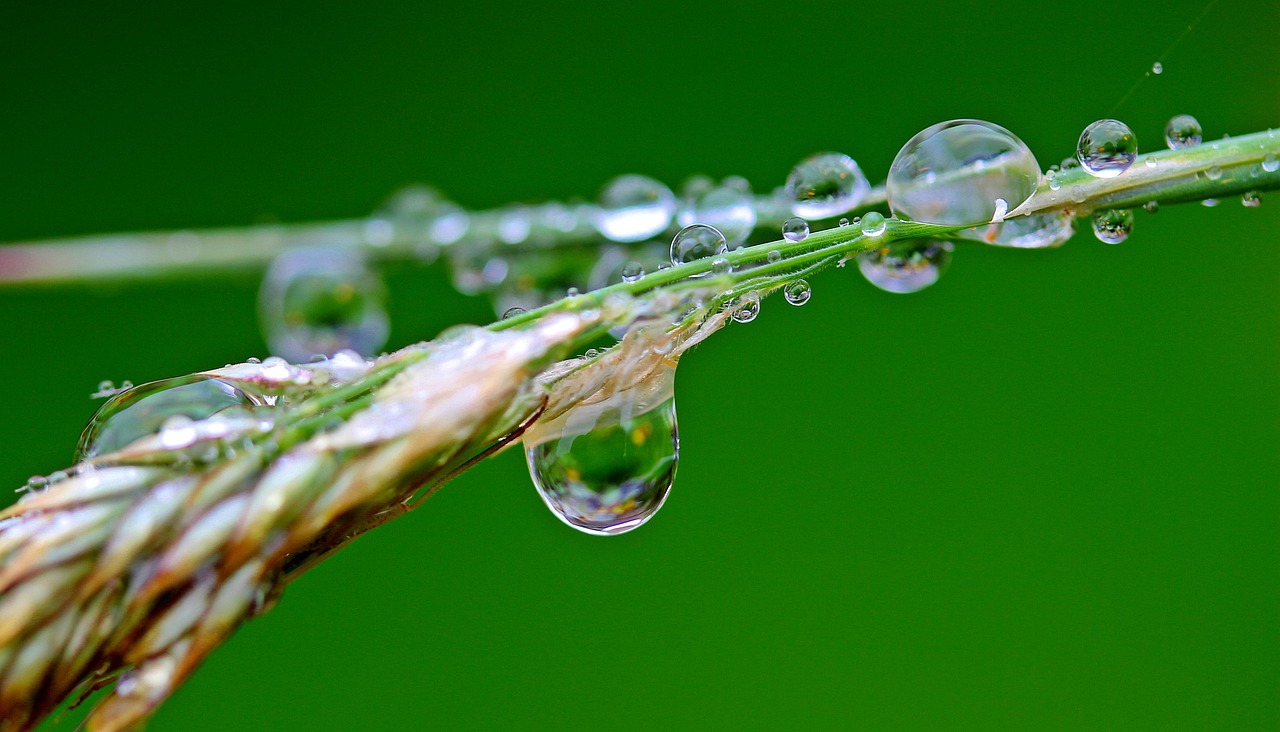
Water beading on a grass seed head looks convincing, but after a light shower it's gone within a couple of hours of sun. Photo: Pixabay.
The sweet spot: one to three days after a real rain
Put the table together and a pattern jumps out. For a day or three after a soaking rain, there's a window where the fine fuels are dry enough to carry a fire but the 100-hour and 1000-hour fuels are still wet. In my run, on day 2 the grass was burnable at 5–11% while the limbs sat around 21% and the logs around 24%.
That's a useful combination for a lot of burns. Fine fuel carries the fire, but heavy fuels, stumps and the organic layer of the soil are less likely to catch and smolder. The guidance lines up with this too:
The Forest Encyclopedia says that after near-average precipitation, "1/4 to 1/2 inch of rain followed by sunny skies, brisk winds, and low humidities will generally result in several days of good prescribed fire conditions with adequate soil protection" (Forest Encyclopedia, rainfall and soil moisture).
For debris and cleared areas: "Burn the cleared area several days after a hard rain while fuels in the surrounding forest are still damp."
Texas Parks and Wildlife's guide to cool-season burns says small hand-stacked brush piles "could be burned several days after a ¾ to 1 inch rain and still have a cooling effect on the soil" (TPWD).
So my answer to "how long after rain?" is roughly this: for a grass burn, the rain itself isn't the main question, today's humidity is. For anything involving heavier fuels, piles, or a place where you want the soil protected, the best window is often a day or a few days after a real soaking rain, not weeks later.
When the days after the rain stay humid
I ran one more version where the days after the rain were muggy: humidity between 95% and 45%. Everything slowed down. The 1-hour fuels bottomed out at 8.6% in the afternoon instead of 5.4%, and the 10-hour fuels took about two days to settle. That's still in the burnable range, but you'll get slower spread and more smoke. If you're trying to burn on a humid day after rain, the smoke management side deserves extra attention.
What my model misses
It's a simple model, and the real ground is messier. A few things it gets wrong or ignores:
Leaf mats and duff. The bottom of a thick litter layer can stay wet long after the top is crisp. Indiana DNR says the bottom of the litter "should always be checked prior to burning to make sure it feels damp."
Clay soil and fast rain. On clay soils, "duration of the rainfall is more important than the amount," because a fast downpour runs off. The Forest Encyclopedia's example: an inch of rain in half an hour can do less good than half an inch spread over two hours.
Drought. After a long dry spell, both Indiana DNR and the Forest Encyclopedia say burning should wait for a soaking rain of at least 1 inch. One rain doesn't fix a drought. The U.S. Drought Monitor is the place to check, and we've written about how drought levels affect your burn window.
Fronts. Rain often comes with a front, and fronts bring wind shifts. TPWD advises it's "not advisable to burn within 24 hours of a frontal passage."
Your firebreaks. Mud and standing water can make it hard to get equipment along your lines. Walk them before burn day.
A post-rain checklist
Measure the rain. A tenth of an inch is a light shower. A half inch or more over a few hours is a real wetting rain. Know which one you got.
Read the next three days of humidity. Dry, breezy days after rain bring fine fuels back fast. Our post on reading a fire weather forecast covers what to look for, and overnight humidity recovery explains how the nights fit in.
Dig into the litter. Push your hand to the bottom of the leaves. Damp on the bottom is what protects the soil.
Snap a stick. Pencil-sized twigs that bend are still wet. Wrist-sized limbs will be wet for days.
Wait out the front. Give it at least 24 hours for winds to settle.
Check the rules again. A rain can lift a burn ban, but not always right away. Check the burn ban map and your permit requirements on the day you burn.
Write it down. Put rain and fuel moisture conditions in your burn plan so the decision is made before you're standing next to a drip torch.
If you're burning slash piles or storm debris, the post-rain window is probably the most useful thing in this article. Wet surroundings and dry piles are exactly the combination you want. For a grass burn, I suspect the takeaway is less exciting but more important: rain mostly doesn't buy you time, so plan around humidity and wind, not around how wet it looked yesterday.
Frequently asked questions
How soon after rain can grass burn?
Often within hours if the sun comes out and humidity drops. Cured grass is a 1-hour fuel, and fire guides note it can burn "within hours of a drenching rain" in good drying conditions.
How much rain counts as a wetting rain?
The NWCG glossary says about a tenth of an inch may reduce fire danger in grass, while about half an inch may be needed for timber fuels under a closed canopy.
Is it better to burn right after rain?
For piles, debris and units with heavy fuels, burning a day or a few days after a soaking rain is often ideal: fine fuels carry fire while logs and soil stay protected. After a light shower, there's little protection at all.
Does one rain end a drought for burning purposes?
No. Prescribed fire guides recommend waiting for a soaking rain of at least an inch after a drought, and checking that the soil and bottom of the litter are actually moist.